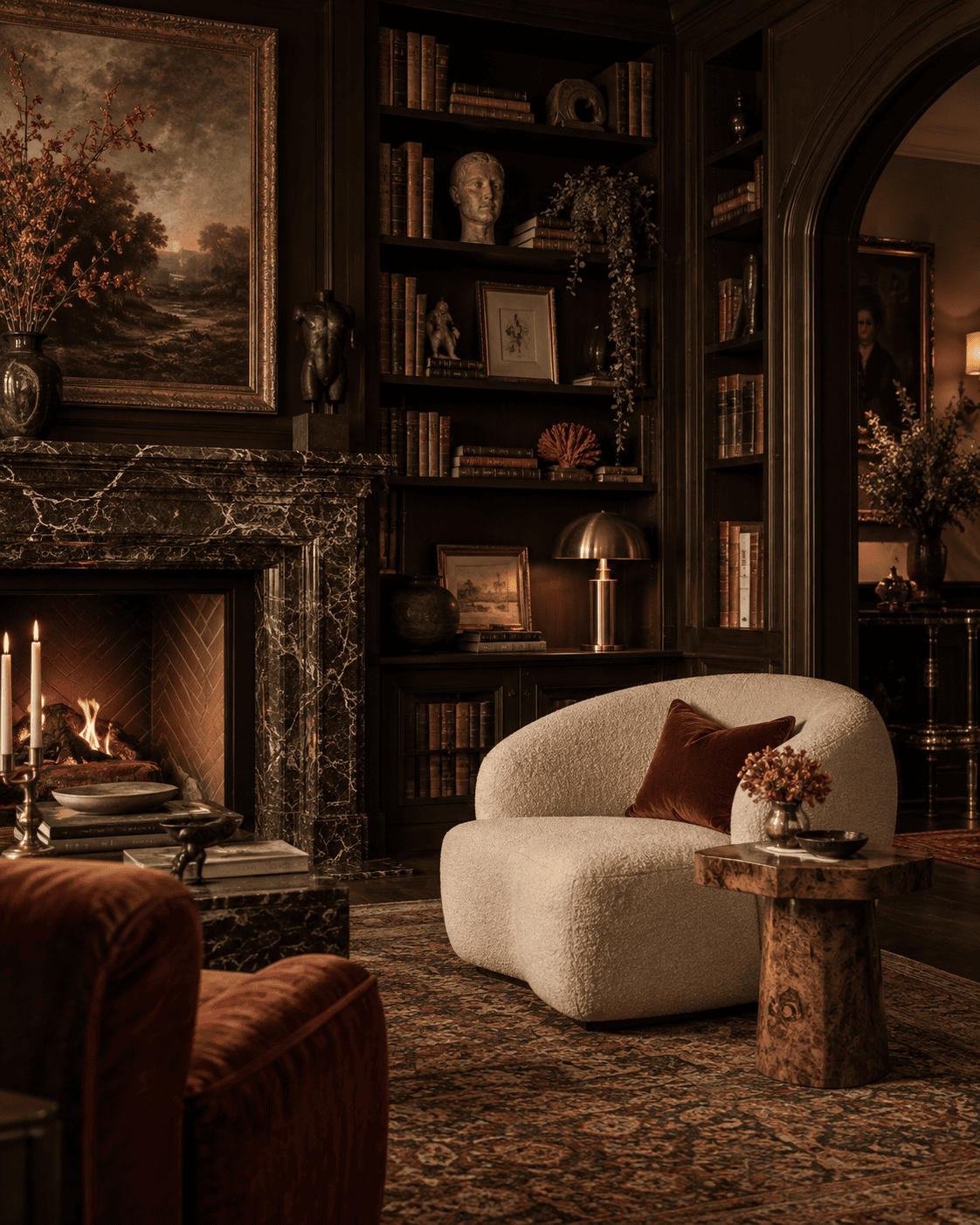
The Secret Language of High-End Clients Revealed

What if “great work” isn’t enough to attract your desired clients?
The Secret Language of High-End Clients Revealed
Luxury clients aren’t just buying your taste or talent but investing in an experience that speaks their language. In this episode, photographer and author Jeffrey Shaw pulls back the velvet curtain on how affluent buyers make decisions. Whether you’re aiming for high-net-worth homeowners or want to elevate your design game, this conversation will shift your thoughts about value, messaging, and what “luxury” really means.
Here’s what you’ll learn:
Why interior design is inherently a luxury—and what that means for your marketing
How affluent buyers think, what influences them, and what they really value
The “boxwood vs. pine” mindset shift that changes everything
How to create brand resonance that makes dream clients feel seen
Why great isn’t good enough—and what to do about it
If you’re an interior designer looking to attract clients who value your work at the highest level, this episode will help you get there and help you learn the secret language of high-end clients.
Listen now and start speaking the secret language of luxury.
About Jeffrey Shaw
Jeffrey speaks about how to sell to the rich at association events and conferences such as ImagingUSA, HOW Design, Growth Marketing, and ProfitCon, as well as for corporations like Verizon and BMW. He is the author of two books, The Self-Employed Life and LINGO, a LinkedIn Learning Instructor, and host of The Self-Employed Life, which ranks among the top 15% of all podcasts on iTunes.
Website:https://jeffreyshaw.com
Instagram: https://www.instagram.com/jeffreyshaw/
Connect with Darla
Instagram:https://www.instagram.com/thedarlapowell
Resources & People Mentioned
Wingnut Academy is LIVE:https://wingnutsocial.com/wingnut-academy/
FOLLOW Wingnut Social
Website:https://www.wingnutsocial.com
Facebook:https://www.facebook.com/WingnutSocial/
X:https://twitter.com/wingnutsocial
Instagram:https://www.instagram.com/wingnutsocial/
Wingnut Webinars:https://www.youtube.com/playlist?list=PLAv8_gbC_Hu6O22jQfCWxJp5Hm6dLCCit
SUBSCRIBE to The Wingnut Social Podcast
Apple Podcasts:https://apple.co/3RJzmtK
GooglePodcasts:https://bit.ly/designedongooglepodcasts
YouTube:https://bit.ly/designedonyoutube
Episode Transcript
Read the full transcript
This transcript was generated automatically and lightly edited, so it may contain small errors.
Host Introduction & Podcast Name
Hey kids, and welcome to Designed by Wingnut Social, the interior design business podcast. I’m your host, Darla Powell, and today
Episode Topic & Guest Intro (Jeffrey Shaw)
We are talking all about attracting high-end luxury clients with guest Jeffrey Shaw. Jeffrey Shaw is an author of Sell to the Rich Lingo and other books on this topic, and he’s a super, super high-end photographer for the luxury clientele. How do you attract luxury clients? Well, there’s a way, there’s a madness, there’s a methodology, there’s a mindset, there’s a way to speak to high-end interior design clients, right? To align with them in their messaging. But don’t listen to me.
You’re going to want to hear Jeffrey, Jeffrey Shaw’s take on it because, you know, he wrote the book about it. So he should know. Before I get into my conversation with Jeffrey though, I want to remind you that
Guest Background & Credentials
Drill. Jeffrey speaks about how to sell to the rich at association events. Events and conferences such as Imaging USA, How Design, Growth Marketing, and ProfitCon, and for corporations like Verizon and BMW. He is the author of 2 books, although he said 3 on the show, The Self-Employed Life and Lingo and How to Sell to the Rich. That was the 3rd. A LinkedIn Learning instructor and the host of The Self-Employed Life. He’s almost on his 1,000th episode. You must be tired. We are almost at 500. I know.
I know, which ranks among the top 15% of all podcasts on iTunes. Wow, that is amazing. Not only almost 1,000 episodes, but top 15% of all podcasts.
Holy cow. All right, Wingnuts, help me in welcoming Jeffrey Shaw to the show. Hey there, Jeffrey Shaw. Welcome to the show. How the hell are you? I’m doing great, Darla. Thank you for having me. It is my pleasure. Today’s topic is something that is near and dear to my heart as a marketing agency for interior designers and the audience listening, which is comprised mostly of interior designers. We have architects too, the trade vendors, etc. But we are talking today about how to attract luxury, high-end clients. And you have a methodology, you have some insight on that. So let’s dig in. First of
What Constitutes a Luxury Client
All, what constitutes a luxury, high-end client? What are we talking about? Top 1%? What are we looking at? you know, what’s important about that question is, to me, there’s all different ways of defining luxury. Like, we know what luxury is, what it should feel like. But here’s the thing, I think this is really important for your audience, for interior designers. Of course, within the industry of interior design, you’ve got people attracting clients at a different scale.
Some that are really going for the very high-end, top-notch clients, others anywhere along the spectrum. The fact of the matter is you’re all in the luxury business because interior design in and of itself is a luxury. So one of the ways that I define luxury that I think is different than the way most people think about it, and it’s an important distinction, is that if you’re vying for discretionary dollars, you’re in a luxury business.
And what’s important about that is, I mean, I, I was a portrait photographer for very affluent families and I didn’t necessarily think of it as being a luxury product. Now, eventually that kind of sunk in like, okay, it is a luxury because nobody needs family photography.
But here’s what really defined it as a luxury is when I realized that I
Luxury as Discretionary Spending (Photographer Anecdote)
Was so out of the league of other photographers. I mean, other photographers are trying to figure out how to make $500. We were striving for an average sale of $10,000. So I was way outta their league. I realized I was a luxury business because I was competing not with other photographers, but with all the other places my clients or potential clients could spend a comparable amount of money. So I was more worried about the jeweler across the street, right? Because he would sell a $10,000 bracelet.
So I felt like that’s what I was up against. And that to me is one of the most important distinctions of what makes you a luxury business is understand, particularly when you’re working with a clientele where The boundaries of money aren’t tight. You’re in a luxury business because you’re fighting for how they’re going to, where they’re going to spend their discretionary dollars. Therefore, you need to be the most luxurious experience. You need to be the best decision.
So like I said, I think on the surface we know what luxury looks and feels like, but I think that’s a different way of looking at what a luxury business is. That’s important. And for interior designers, you’re inherently in a luxury business because not everyone can afford an interest. I did a blog post a while back on comparing pest control to Louis Vuitton because they’re, in a way, they’re both a luxury business. Okay.
I want to hear a little bit about this because in my mind I’m thinking pest control is a necessity, a commodity. I don’t want roaches in my damn house.
That is not a luxury. Well, as I said, I’m in Florida, so pest control feels more like a necessity here. Yeah. Palmetto bugs there. Yeah. Exactly. It’s just a cute name for cockroaches. It’s still a luxury because not everybody can afford pest control. I mean, I’ve spent many years of my life— let’s be very clear, I did not grow up in the luxury world at all. I grew up very lower middle class. My family didn’t have pest control. You know, my parents would have been more likely to run around with cans of Raid.
Same, right? Exactly. So there is— that’s why I made the comparison. And it’s an extreme example. How is pest control like Louis Vuitton? The point of the article that I wrote was that it’s, as we’re discussing, it’s vying for discretionary dollars.
You know, my parents would’ve chosen to, you know, to them it was kind of like, do we buy jeans for the kids to go back to school or would we hire pest control? Right. So pest control would’ve been an option. I said, you know, I grew up in a place where they just lived with squirrels in the attic and an occasional mouse running across the floor. Right. No biggie. I can afford otherwise, so I’m not tolerating it. Like, I will have no bugs in my house. So it is a luxury. Okay.
You know, when you put it that way, thinking of my childhood growing up and we, I don’t know if we’re around the same age, I’m Gen X for sure. I can’t even imagine my parents purchasing pest control on any kind of regular schedule. It was a raid and we were middle class, right?
So that’s a very good point. Okay. But compared to Louis Vuitton, is there more to that? Well, I don’t think Louis Vuitton would appreciate it. The point is, is the main point we’re saying is that it’s vying for discretionary dollars. And I think that’s one of the most important marketing concepts for anybody to understand, because as interior designers, for example, people, you have to realize when you’re working with a clientele that their boundaries for money are so much broader.
They’re sitting there thinking, well, do we redo this house or do we get the house in the mountains we’ve been wanting? Do we redo this room or do we take and go to Europe for a month?
Right? So they’re not comparing apples to apples. So what’s important to understand about that is I like the way it ups the bar. So I feel like if you’re gonna serve this luxury buyer market, you have to do everything at such a higher level. So we’re no longer— what I suggest to the many designers that I interact with is Don’t worry about competing with other designers. Don’t even worry about competing in your industry.
Raise the bar to imagining how can you be the choice of your ideal clients because you’re the best choice they can make in their life. And then I’ll go even further and say, let’s even go further and say it’s not just the best decision in their life at that time, but can you promise them a life-transforming experience? Because I think that’s how high the bar has been raised. On what people want
Raising the Bar: Life‑Transforming Experiences
Out of their investments in luxury. Like, I don’t want it to just be a beautiful piece of jewelry. I want it to change my life. I want it to change how I feel about myself. And that certainly applies to interior design. Like, they don’t just want the beautiful room. They want it to be— it’s a life-transforming experience because when they walk in that room, it makes them feel good about their path to success.
Or they walk into a wellness room and the wellness room is designed all around their health and peak performance. So what I like about it, and I am maybe foolishly, I’m always embracing like the extreme. How can we raise the bar? Which I think is important because I think in many ways, one of the things I say often with regards to my book, Sell to the Rich, and one of the reasons to read it is that great isn’t good enough anymore.
And particularly at the luxury market, because people expect great quality, great customer service, great experiences. So if you give them great, it doesn’t impress them. At a minimum. Yeah. They figure this is what I’m paying for. And great for the luxury market. Like, I mean, it’s pretty hard to blow them away. They’ve experienced— one of the things that was interesting as a photographer in a very wealthy town that I would always— I didn’t photograph weddings.
I did briefly for the first 2 years out of photography school and swore them off for life. I’m like, never, never will I photograph weddings. I had my portrait clients like offer me double, you know, like extreme amounts of money. We’ll get $100,000 to photograph my daughter’s wedding.
And I’m like, nope, not doing it. There is no amount of money that I don’t have the stomach for. I admire those that can, but I would have wedding photographers visit with me and want to like, they imagined this wealthy town like, oh my gosh, they can make a killing here in weddings. I was like, you know what? There is no one outstanding wedding photographer here. They might fly in a photographer from some other part of the country, but here’s the thing with this market.
The affluent market, their wedding is not the biggest day of their life. They’re getting married out of love and, you know, all the wonderful, beautiful reasons, but it’s not the first time they’ve worn a white dress because they were probably debutantes. It’s certainly not the first time they’re in a limousine because they take a limo every weekend to New York City. I mean, there’s nothing that’s really going to impress that clientele that they haven’t experienced at a great level.
So you have to think at a whole other level of exceptional, like Great isn’t good enough. You have to up the, like, don’t just, like I said, create promises and deliver on the promise that you’re going to decorate their home and design their home in a way that it is life-transforming. That ups the bar to a whole other level. Okay. So I have a couple of questions here. The first one that pops to mind, and gosh, hopefully I can keep my menopause brain on this train of thought, is right.
So we have a wide array of interior designers and decorators who listen to the show. We have super high-end interior designers who do cater to the luxury market, quote unquote, right? And we have interior designers who are just starting out their businesses or interior designers who might fall under the, they’re decorating, they’re doing furnishings, floor plans, maybe some paint color consultations. Does this same mindset and methodology for attracting high-end apply to their businesses as well?
Or is this something more aspirational? So I said, one key thing to understand is that No matter who you’re serving as an interior designer, whatever clientele, you’re in a luxury business. Okay. So let’s start with that baseline.
With my book, Sell to the Rich, it is, I mean, for anybody currently serving the affluent market, this book is golden because it’s, I’m sure going to reveal, I even said the subtitle of the book is The Insider’s Handbook to Selling Luxury. I refer to insider because one of the things I experienced as a photographer was I like to say, I don’t just know this market. I was in their closets. Like I was literally in the closets of affluent people for more than 40 years.
That’s where the most intimate conversations take place, right? So if you’re already serving the affluent clientele, I have no doubt that I’m going to be, you’re going to read some strategies and some insights into the way that they think that you probably have never heard before.
But I’m also always stressing the point that even if you’re not currently serving the highest end client and maybe you have no ambition to, What I think is valuable about this book is just imagine if you knew the inside secrets of your highest luxury brands and serving the most affluent clients. What advantage could that put your, let’s say, everyday business at if you understood the psychology of the hardest buyers in the world?
So I think it can be a very aspirational, motivational book, even if for those that aren’t currently serving or don’t desire to serve the utmost high-end client, but to raise the bar. I mean, one of the things you have to understand, I mean, I somewhat jokingly say, although it’s really not a joke, I mean, working with a luxury buyer is like real life on steroids.
Everything’s overdramatic. Everything’s overemphasized. Because I said, when money is primarily off the table in their buying decision, everything else matters. Like we know that people make emotional decisions. Well, when you’re serving the luxury buyer and money isn’t their parameter, like you really have to evoke emotions. Like you really have to tap into their emotional making decisions at an extreme level. So I said serving the luxury buyer is like real life on steroids. It’s everything’s overexaggerated.
So Jeffrey, I know you have your book Sell to the Rich, right? And I’m sure that the audience is intrigued and they’re gonna go out and pick up your book, but can you share with us a couple of those insights, a couple of examples Susan McNuggets wants to overdeliver and she delivers terrific service, but she does want to take it up to that next level. Give us a couple of insights on what that can look like. So one, you have to create brand resonance.
Brand Resonance & “Lingo” for Affluent Clients
They have to feel like you really get them. That’s the thing. I mean, people assume it’s hard to break into this market and it is. And they have their own, like my first book, which came out in 2018, it’s called Lingo. And Lingo, which is a much broader audience type of book. But it reveals my journey to building this upscale photography business where I had to figure out what’s the lingo of this clientele. It was a world I didn’t know at all. I didn’t come from that world. So I like to think of it as a lingo. Like what’s the lingo of your ideal clients? What resonates for them? What subtle little symbols and words?
Holiday Cards & Boxwood Example
I’ll give you a kind of a fun example. One of the services I offered, because I realized real quickly with this very affluent clientele, something that was very important to them in a lifestyle. That meant nothing to me growing up was there’s, they send out these gorgeous holiday cards and really beautiful. So we custom designed holiday cards and we’re talking cards that are about $10 each and they’re sending out 1,000 of them.
Like this is a major investment in holiday cards, but I realized real quick that there are like symbols in their world that the way Christmas looks to them. So for example, something as simple as boxwood. Right? We know it as a bush, but in their homes, they being the wealthy homes, the evergreen boughs on the fireplace running up and down the staircase railings were boxwood. In my family, the ropings were pine. Okay?
So when we were designing these holiday cards, we would decorate the cards with sprigs of boxwood, not pine. It’s like this cue to an affluent clientele that they know that you get them, that you understand the subtleties of the world. Boxwood is just more elegant than pine. It’s a more refined leaf. I have plenty in my front yard. Exactly.
So I’m saying, I mean, it’s a common bush outside and it, one of the reasons, again, why, if you look at all the connections, one of the reasons where it’s really popular in landscape design is that it’s, and I’ve studied landscape design for a number of years, so it’s easily trimmable. So it creates really precise borders.
So think about the clientele, right? The clientele is very precise, very exacting. Their walkways are beautifully manicured, lined with boxwood. So boxwood translates itself into the interior of the home in their holiday decor. So one thing you want to do is you have to understand one of the ways that you can do this, which is what I did when I was starting at 23 years old, wanting to break into this market. I went to every high-end brand in New York City you could imagine.
Bergdorf Goodman was my favorite, and I have tons of incredible stories at Bergdorf Goodman. And for anybody that’s not familiar with Bergdorf Goodman, it’s a one-of-a-kind department store on Fifth Avenue. So I would go there and I’d imagine I was in the shoes of those that I wanted to serve.
And I didn’t go there so much to study the store or the brand. I just imagined if I were my ideal client, this wealthy person, And it wasn’t, I wasn’t going there with airs or pretentiousness. I was going there with insane curiosity. If I were this client, what do I need to see, hear, and feel to trigger me? What am I noticing about pricing psychology? How are things merchandised? What is the style of how things are presented? How are things packaged? This is how I just had such a curious mindset.
And to this day, I still believe in that. I refer to it as embodying the lifestyle of those that you serve. Like even if you go to the most expensive shopping environments, I think it’s really important to just devour what you see. Let it absorb into your bones so you can embody what they experience. So you can imagine what does life look like from their perspective.
So those are some of the things I would start with to really understand, to open up your eyes, open up your world and realize there’s, I refer to it as a secret language. And you know what, at the complete opposite end, Walmart has a secret language. Right? Walmart knows exactly how to speak to their ideal clients. Very cost-conscious.
We’re going to talk about pricing. We’re going to have rollback pricing. Like they’re speaking the lingo of their ideal clients and you need to do the same on the higher end. So one thing to do is just become a massive observer and try to replicate if you were your ideal client, what do you need to see, hear, and feel? What resonates for you? Which is why I refer to it as resonance branding, like creating an emotional resonance. To create the connection.
So where are those interior designers who maybe haven’t been a part of this world like you and I admittedly, right? Besides going to Bergdorf Goodman’s, you know, in New York, where else are we going to find out what are the emotional triggers for that world? Right? Because we don’t know what we don’t know. I think
Shifting Values, Market Timing & Opportunity for Design
People know more than they realize. And I think a lot of times people don’t trust their gut instinct. One of the important things to note also, and I think this is really pertinent right now is that, and it’s probably my greatest observation after more than 40 years in business, is how quickly people’s values shift, how quickly what matters to people changes, how quickly society suddenly goes in a different direction. Like it, to me, happens so quickly nowadays and more frequently.
It just, see, it used to feel like you know, life just stayed the same and every 10 years maybe it was a little different where now it’s just like, it’s so immediate.
And whether it’s a major catastrophe, like, you know, 9/11 or a pandemic, or if it’s something more subtle, but something I’ve been saying to interior designers now for quite some time is I actually think this is, and I know this contradicts what a lot of people might be feeling right now. It might feel like a financial struggle. Are we heading towards a recession? Are people— and I don’t discount people’s concerns, but I’ve been in business long enough to say, but look for the silver lining, look for opportunity.
And I think we’re at a cusp of what can be a really good time for interior design. Yes, we always go through periods of time when people might be more challenged to spend money.
The reason why I think right now is a good time for interior design is that the world is crazy. The world is out of control. And, you know, regardless of someone’s political stance, just, there’s just craziness in the world. What’s the one thing you can control is your home. I think people are going to be turning towards, oh my God, the world is crazy. I’m not even sure if I want to be out in it. And if I have to be out in the workplace and face the challenges of the day, I want nothing more than to come home.
And my home be a respite from it all. So I predict— I think this is a really good time for interior design. You get particularly the luxury market. What’s interesting, again, I said earlier how they’re like real life on steroids. They’re trendsetters, not trend followers. So they tend to be amongst the first audience to pull back when there’s concerns about where the economy is going. They’ll be some of the first to respond.
They get very cautious and they start just looking a little side-eyed at, okay, where’s this going and how’s it going to impact my finances? Of course, we all know they, for the most part, have plenty to go with, but they’re cautious. So they’ll be the first to respond. Good news is they’re also the first to recover.
But in between there, when we’re dealing with it, they will spend the money. You just have to figure out what’s more important to them than their cautiousness. Without a doubt, several things happen when there’s economic challenges. I said, one, they will deliberate longer. They will be more cautious. Again, I believe ultimately they’re going to spend the amount of money they want to spend. They’re going to get what they want. That’s what they’re used to, but they will deliberate longer.
They will want more information. They want you to justify the expense more. So you need to be armed with a lot more reasons why they should invest in not just the whole project, but in a single piece of furniture.
They want things to pay off in the long run. They’re looking for more investment quality. They probably, again, you have to look in the moment, like what is it? Do they want things that they may not spend $25,000 on a sofa, but they may put that same amount of money into a meditation room because that’s become suddenly more important to them, that respite type of mentality.
So I think in the end, particularly the higher-end luxury market, they will almost spend the exact same amount of money as what they choose to spend, but it moves around a lot. And again, I believe if being aware of that, you can position yourself to be on the right side of that. Again, I’ve been in luxury business my whole life. Nobody needs— in the most challenging of times, nobody needs family photography. And yet It has always shocked me. 9/11 was the perfect example. 9/11 happened September 11th, right?
That is smack in the middle of the busiest season for me because my business was, although it was, you know, throughout the US, I was based in the Northeast. So at that time of the year, everybody wants to photograph outside. It’s beautiful. The weather’s gorgeous.
They want to double up and use the portraits they’re creating for their own usage as gifts and holiday cards. September 11th, right in the middle of that. I’m like, I’m doomed. Like this might just do me under. And my clients were almost entirely Wall Street clients. So those towers came down. I personally lost 3 clients that I was very close to, but almost my entire client base was affected. And here’s what shocked me.
Emotional Buying in Crisis (9/11 & COVID Lessons)
It turned into the biggest holiday season I ever had in 40 years because their emotional reaction to it was family matters. Didn’t matter. They didn’t— nobody knew what their future looked like. They didn’t even have offices to go to. I had clients contacting me and saying— I mean, one client contacted me to ask me if I had all the files and did I know what portraits were in his office because his wife had been buying portraits to put in his office for years. And I said, yes, I have everything on file.
I have all your files, no problem. And he said to me, he’s, do you have any idea How many of your portraits are in that rubble? And it just, oof, it got me right in the heart. I’m like, it never occurred to me that the sentiment. So again, just when you think your business might be over, your life might be over, if you can figure out to get, how do you get on the right emotional side?
And I think for interior design now, one of those key messages is when the world is out of control, the only place you can control is your home. And your home can be a respite. We did experience that as an industry during COVID Sure. Because people were not spending money on travel. They couldn’t, right? People weren’t spending money going on vacation or other things. So they turned inward and they were like, how do we improve our homes? And it was, it was insane. We could not keep up with the demand.
And they had to adapt their homes to remote work and separation, right? All those open concept homes, it was like, oh my God, I need walls. Everybody in my family is in the same house. Some people wanted walls. That’s true. We did see the open floor plan kind of shrunk a little bit. We saw some change in that for sure.
So, Jeffrey, before we get into the fire round, what is one actionable takeaway that interior designers can start using in their messaging and positioning in order to just start this journey of just tightening up their messaging to get in alignment with those ideal clients who are luxury? Yeah, well, honestly, I really want to encourage
Actionable Takeaway: Geography & Client “Accent”
People to look, be very sensitive geographically too. So I don’t want to just give one broad— I mean, here’s the interesting thing about working in the luxury market is that there are absolute similarity and commonalities in their mindset and how they behave across the board, almost any job. But then it’s sort of like that’s— they have a language and they have an accent. So Right? I got money, y’all. Exactly.
Well, as I say, as a photographer, so again, my primary client base was New York City, Connecticut, Hamptons. You know, that was my, the tri-state area was my primary base. They, my clients had an average of 3 to 5 homes. So that brought me everywhere, even international because they had homes everywhere.
But that was my base. But they had homes, I said, in Miami and they had homes in Europe and It was, I as a photographer had a style just like your designers have a style, but I knew how to slightly tweak my style based on the geography. So I used to say like in New England, I had to reflect their lifestyle in subtle messaging. So they never wanted a photograph where their house on the mansion on the hill is in the background. Never.
They, I would photograph them in a way that you’d see the columns, you would see the quality of the furniture, you’d see the texture of the fabric. So you would know the lifestyle without it being ostentatious. Those same clients would have a house in Miami and they’d be like, can you get my yacht, Lamborghini, and the house all in the same photograph?
Right. Yeah. I lived in Miami. So yeah, I’m familiar with that mentality. Yeah. And I just moved out of Miami 2 years ago. I lived there for 6 years. But that’s what I mean. It’s like, truly understand the lingo of your clients. It’s not enough just to understand there are commonalities in the mindset across the board. There’s a certain way that, and there are They care deeply about everything, and we know that. I mean, they’re detail-oriented.
There are certain commonalities across the board, but you also need to understand the accent of your particular client. How people want their lifestyle portrayed in the South is going to be different than Northeast, different than LA, different than Miami. So depending on your geographical area, you want to pay attention. And I know many designers that serve various areas, so you have to kind of take that into consideration and show your flexibility while also maintaining your brand integrity.
And that’s the tough balance. That is. We actually have a client. She’s been with us for a few months. She’s a super high-end interior designer in Connecticut. And that is part of her marketing strategy is speaking to that Connecticut, the geography and the lifestyle and what’s— even though she goes a little bit outside, right? That’s her ideal client.
That’s what she wants to reach. And that is super important. You may be an interior designer’s move to a new space is to learn that lingo and the lifestyle and And what that looks like. So that’s a very, very good tip. Jeffrey Shaw, thank you so much for imparting this wisdom. And now I have to ask you, are you ready for the What Up Wingnut round? Sure.
What Up Wingnut
What would the hashtag on your tombstone be? It would be #ImProudOfYou. Oh, that’s so sweet. I’m going the sentimental route. Well, you know, it’s something I rarely say to myself and I would like to get in the habit. I, you know, so I’d love that to be it. And it’s also, something I am very aware of that I never heard. And I think it’s so lacking from— my father died when I was young.
He died before he ever had— maybe he would have at some point in his life, but he died before he ever had a chance to tell me he would’ve been proud of me. And of course that sticks with you, like something we aspire to do. But I also think it’s equally important we say to ourselves, I’m proud of you. I agree with you. I need to start doing that myself. You’re stuck on a deserted island, but you can have your one favorite food. What’s it gonna be? So cuisine-wise, I’m going Indian. I could eat Indian food.
And when I lived in New York City, I was so close to Astoria, which is where all, you know, good Indian food is. So I’m gonna go with Indian as a cuisine. And if I had to choose one food, it probably would be saag paneer. I probably could eat saag every day. I love Indian food.
Oh my gosh. Yeah. And there’s none here. No, Miami, there is one and it’s actually farm to table, which is crazy. Like they grow their own spices. It’s called Ghee Kitchen. It’s like Kind of the south end of Miami. Yeah, I’m dying to go somewhere where there’s good— sorry, sorry, Maryland. I love you, Maryland, for other reasons, but food, you know.
And last but not least, please recommend a book that’s impacted you either personally or professionally. You know, I love the way books— what I love about that question is that I could have said so many current ones, but I’m going to go like retro here. A book that had big impact on me, it’s called Let Them Eat Cake, and it’s by Pamela Danziger. Okay. By Marie Antoinette. And I reached out to her on LinkedIn recently.
I’m like, you know, I just want you to know, I mean, the book I think was written like 2005 or something. It’s like a 20-year-old book. And I reached out to her and asked her, you know, told her that the impact her book had on me, because again, let them eat cake. You know, she’s speaking to the luxury market and she’s 20 years later, she’s like so respected in the luxury space. But I tell you what, that book meant the world to me 20 years ago because nobody was talking about this.
And here I was, this photographer who built this business, and I was so different than the industry. All the other photographers around me were trying to figure out how to pay their bills, and I’m building this prestigious luxury— it was so lonely. Like, I had no one to talk to. I just— so finding a book like that, it’s like, oh my gosh, this is a book that speaks luxury.
And I still find to this day, like, by nature and definition, if you are in the luxury space You’re singling yourself out in your industry and above everybody else. Like, you don’t have a lot of resources. Yeah, that’s true. So I’m gonna go with that as an old book to pick up and like read again.
All right. So after you get Sell to the Rich, that first, then Let Them Eat Cake by Pam Danziger, right? Is that what we said? Okay. All right. Jeffrey Shaw, thank you so much for joining us. Please tell the wingnuts listening where they can go to find out more about you, your amazing books, and we’ll call it a day. Awesome. Best place to go
Where to Find Jeffrey & Podcast Relaunch
Is jeffreyshaw.com website for all things. My books are there. All 3 of them. I have 3 books. This is Self to Rich is the 3rd. So yeah, you find all that and hopefully, you know, some other resources. My current podcast is called The Self-Employed Life. That actually ends August 6th. We will be broadcasting our 1,000th episode. 1,000. Congrats. And I decided I don’t know where to go with that. So I’m just ending the show after 11 years and 1,000 episodes.
I’m just ending it, but we’re relaunching July 1st, a new podcast called Selling Luxury. Oh, perfect. Right? So keep an eye out for this. So there’s nothing about that on the website. And where one of your guests will be Darla Powell. Okay, great. I’m glad we worked that out. That’s terrific. We’ll see if we can make that happen. Jeffrey Shaw, thank you so much for joining us.
Thank you. All right, kids, I don’t know about you, but my biggest takeaway from my conversation with Jeffrey Shaw was to not act as if, but to put yourself remotely in that world to get the information needed on how to speak to your ideal client. I don’t think that he was going from the aspect of be something you’re not, because we all know authenticity is super important.
But when we’re doing marketing and we’re doing copywriting and messaging, and most of all, providing that high-end experience that clientele in this market want, I think it is super important to know what those little touches are, what those little touches look like.
If you tuned in a week or two ago to our episode with Harry Myers of HLM Designs, he adds a whole hospitality mindset to his interior design projects and interior design to his hospitality projects, which in the end really does boil down to that super high-end experience. And you know, you’ve seen this, right? You’ll go out of your way where you live to go to that doctor’s office or that restaurant. Maybe, okay, maybe he misdiagnoses you.
I’m just kidding. But if their staff provides that luxury experience, and I’m not saying they’re massaging your feet, but they’re polite, they’re professional, they’re attentive versus the other doctor’s office who is just like, yeah, whatever. And the product is the same. You’re going to go, you’re going to get diagnosed. You got your stuff. You’re going to go. You’re going to the office that has that high-end experience, right? There’s a restaurant here in Maryland that I go to.
It’s, there’s not a lot of good barbecue around here. Sorry. Sorry. I love you, Maryland. I really do. But food ain’t it. But they are on point. It is like a chain barbecue restaurant. And I will go there over another place that had better food just because when you go, they’re attentive, they’re polite. They make sure you have everything you want. It’s that kind of thing, right? Now, I don’t know about putting boxwood on your Christmas cards.
That might work, or in your marketing, but I think that’s a good example of kind of the line of thought to go down while you’re researching this. If you’re a high-end interior designer in San Diego or in Connecticut or in Miami, to immerse yourself a little bit in those places and in that lifestyle and in those experiences to get a feel of what that service could look like.
And Jeffrey’s right, as interior designers, whether you’re a decorator, you’re a designer for the day, or whatever your level of service looks like, it is a luxury. Nobody needs that. And his analogy from pest control to Louis Vuitton, I mean, at first I was like, come on, what is this about? But it made sense when he explained it, right? That’s a thing. So even if you’re doing designer for the day, think about how you can make that an experience that is life-changing.
It’s not just trading pesos for services, right? You’re not just getting $100, $500, $1,000. Here’s X product. Think about how you can elevate that experience and get $2,000 for that product, but seriously deliver on that, right? What does that look like in your market? You know, that’s gonna take some research. Because every market’s different.
Every clientele’s different. Your service is different. Your aesthetic’s different. Your ideal client’s different. If you need a strategy to help market to your clients, hit up wingnutsocial.com. You see what I did there? And we can help you figure that out on social and on your website. 100%. All right, guys. Thank you for joining us again. Jeffrey Shaw, Sell to the Rich.
Outro & Final Notes
His book is out there. I’m sure you can get it wherever you get books. And remember, until next time, to get out there, get uncomfortable, and be great. Thanks for joining us today. Be sure to tune in next week for more business and marketing info and insightful interviews with industry experts and design superstars. Can’t wait? Then head on over to wingnutsocial.com for more great content to help you get your business to the next level.
All right, Jeffrey— Jeffrey Schloss. Jeffrey Schloss. I don’t speak for a living. All right, Jeffrey Schloss. A couple of weeks ago, or last week— what is it? God damn it.