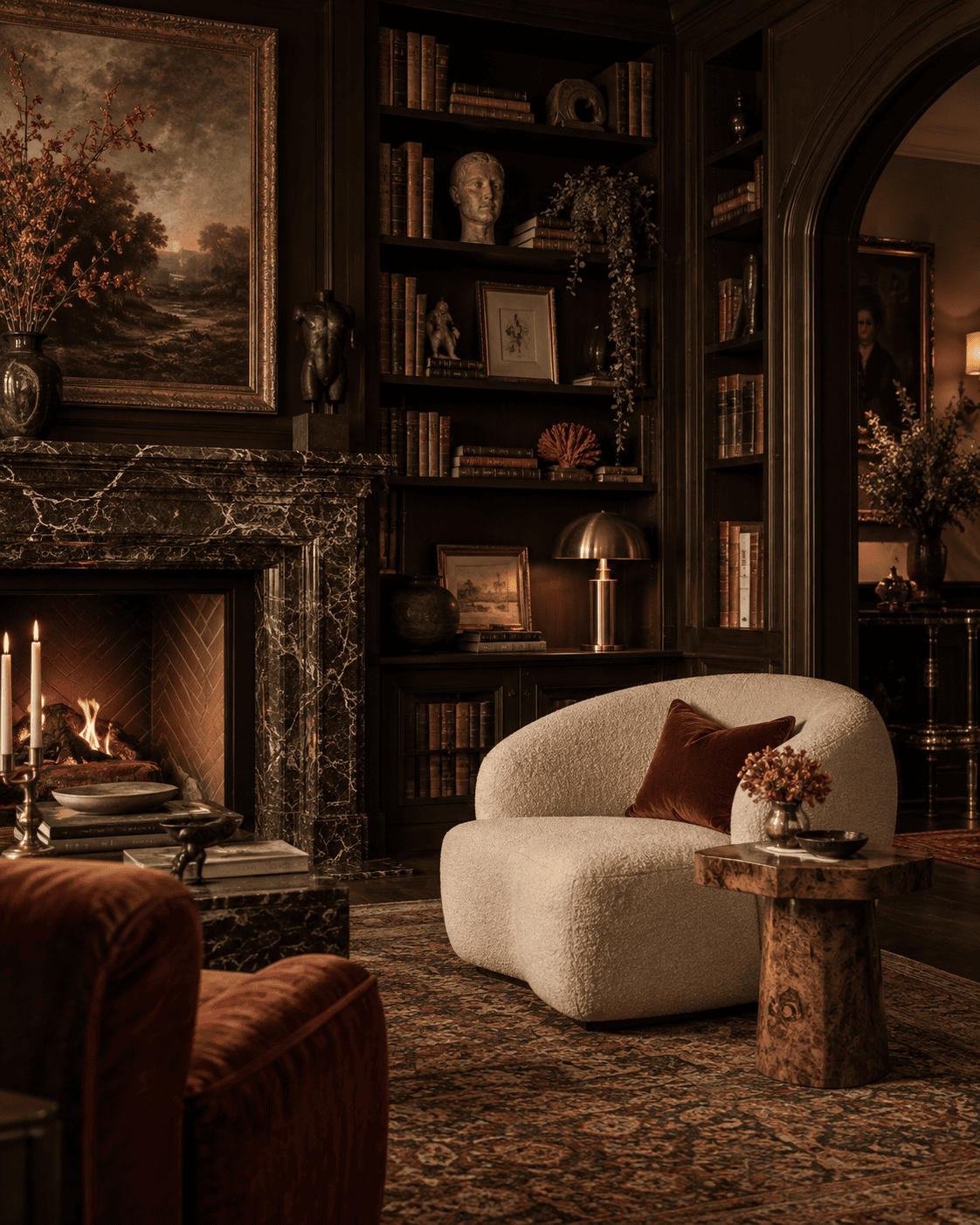
Rebranding 101: From Builder-Grade to High-End Clientele

How do you go from flipping builder-grade homes to designing multi-million-dollar projects that align with your true creative vision?
In this episode, Darla chats with Bre Hance, the powerhouse Founder of InHance Design Build, about the real mindset and strategic pivots that helped her level up her business and attract high-end interior design clients.
From her early days taking on “anything that came in the door” to now leading a luxury design-build firm in Los Angeles, Bre shares what it takes to grow with intention, and without losing your soul in the process.
You’ll learn:
Why Bre stopped saying yes to every project (and what she did instead).
How to mentally prepare to work with high-end clientele.
What strategic branding decisions helped Bre level up.
The role of vulnerability, storytelling, and authenticity in attracting luxury clients.
How mindset work and coaching helped her own her worth.
You’ll hear about the fears she had to overcome, the branding moves that changed everything, and how she crafted client experiences that made her irresistible to luxury buyers. This one’s not just inspiring, it’s a blueprint.
Listen now and learn how to upgrade your clients and your confidence.
([00:00]) Bre’s small-town roots and big-city mindset.
([04:20]) From hustle to high-end: redefining the client journey.
([08:15]) The branding shift that unlocked a higher-level audience.
([13:30]) How mindset coaching changed her business.
([18:40]) Why storytelling and social proof win premium clients.
([22:55]) Letting go of fear and stepping into your future self.
About Bre Hance
Bre Hance is the Owner and Principal Designer at InHance, a Los Angeles-based high-end residential design/build firm. Over the past ten years, InHance has designed over 200 single-family and multi-family residences throughout the country. Bre’s emphasis on bold colors, eclectic yet luxurious design, and her philosophy of elevated everyday living has made her one of LA’s most sought-after designers and design experts.
Connect with Darla
Resources & People Mentioned
Getting Things Done by David Allen.
Business of Design by Kimberley Seldon
FOLLOW Wingnut Social
Website
Facebook
X
Instagram
Wingnut Webinars
SUBSCRIBE to The Wingnut Social Podcast
Episode Transcript
Read the full transcript
This transcript was generated automatically and lightly edited, so it may contain small errors.
Podcast Intro & Host Welcome
Have you hit a wall when it comes to growing your design business? Then welcome Welcome to Designed by Wingnut Social, helping home professionals accelerate their success with proven industry practices and expert advice. Hey kids,
Guest Introduction — Bre Hance / InHance
And welcome to Designed by Wingnut Social. Today we are joined by Bre Hance of inhanceinteriors.com to discuss her journey from going to a builder-grade kind of flipping design situation to transferring that over to attracting higher-end interior design clients. She’s a design-build firm. If you head on over to inhanceinteriors.com, inhanceinteriors.com. You can see her work with 42,000 followers on Instagram. Bre is doing something right.
So we discuss her journey, where that started, the steps she took in order to transition from doing the smaller projects, the less expensive project, the less profitable projects to appealing to those higher-end clientele, what that looks like, what she did, what you can replicate and hear her journey. But before I get in my conversation with the amazing and lovely Bre, Wingnut Social is our sponsor, wingnutsocial.com.
We are a digital marketing agency for you guys, home professionals, interior designers, architects, furnishings manufacturers, makers. Head on over to wingnutsocial.com. See how we can help you with your social media marketing, your search engine optimization. Would you like for ChatGPT to recommend you to a client searching for what it is that you do? Well, we are your marketing firm, wingnutsocial.com. All right. You guys know the drill. Let me tell you all about Bre Hance.
Bre Hance is the owner and principal designer at InHance, a Los Angeles-based high-end residential design-build firm. Over the past 10 years, InHance has designed over 200 single-family and multifamily residences nationwide.
Bre’s emphasis on bold colors, eclectic yet luxurious design, and philosophy of elevated everyday living, trademarked, has made her one of Los Angeles’s most sought-after designers and design experts. Wingnuts, Help me in welcoming Bre Hance to the show.
Interview Begins — Conversation with Bre
Hey there, Bre Hance. Welcome to the show. How the hell are you? I am freaking good. I’m excited to be here. I know we finally got this worked out after beaucoup technical difficulties, but here you are. And I must say, you look gorgeous. Your background is gorgeous. You’re in full 1080p high definition for those of you tuned into our YouTube channel designed by Wingnut Social. So we’re ready to go. Has anyone ever told you that you kind of look like Miley Cyrus? I have gotten that.
I feel like it’s our mouth, like our mouth and mannerisms a little bit. Yeah, a little bit. I mean, that’s not a bad thing. Miley Cyrus is awesome. I love Miley Cyrus. Yeah, that’s pretty good.
And again, growing up, I loved Billy Ray Cyrus. Does that age me though? Achy Breaky Heart is what his big hit— yeah, his big hit was Achy Breaky Heart and Miley Cyrus. And Miley Cyrus. I’ll take it. Yeah, I do hear that every once in a while though. Yeah. So again, if you want to see how much Bre looks like Miley Cyrus, head on over to our YouTube channel, Designed by Wingnut Social, and let I don’t know. What do you think? I think so. Can you sing? No. Gosh. me either. Awful. Not even a hope. Yeah.
Well, I sing way down by the Suwannee River, way down, way down. I love that. You know, I’m really, really, I have 3 little kids, so I’m really good at Twinkle Twinkle, Itsy Bitsy Spider, Over the Rainbow.
Like they don’t judge me yet, so I can nail those. You don’t wanna give us a little sample? No, I’m gonna stay in my lane as a designer and I will make things pretty, just not that. All right. So as
Founding InHance & Early Years
I told the audience in your intro, you are the owner and principal designer at InHance, and your last name is Hance. So that’s a very, very clever name. And the direction of the show is in attracting more of a luxury clientele, a luxury market. And as an interior designer, you’ve had your firm for 11 years now. Is that correct? That’s right. All right. So let’s dig in a little bit. Let’s talk about InHance, Bre Hance, and what that journey looked like. Right.
So when you started 11 years ago, Was that the goal right out the gate? I’m just gonna go and I’m gonna attract luxury clientele and I’ve got it nailed in from the start. I, I think that’s everyone’s goal, right? Like, I’m gonna do the biggest and best projects, the ones I see on TV.
And like, I mean, sure, it’s a lofty goal, but for me it was just, let me get my feet wet. Let me figure out how to do this. I’m starting my own company. I’m taking the risk of going out there and building my own brand and marketing and finding my own clients and It definitely did not start out that way. It’s evolved into that. And I’d say I’ve gotten into the high-end luxury part in the last 4 or 5 years.
Transition to High‑End Clients
Really? Okay. So kind of like around the midway point, right? Yeah. So let’s talk about those first 6 years or so. So was your clientele, did it run the gamut? Were you serving luxury, you know, maybe more middle-class kind of clientele, or what did that look like and what made you make the switch to the focus? Well, an interesting part how I started was getting into, my husband is an investor developer in Los Angeles. And so, nice. I had another job at the time and I didn’t go to school for interior design.
I have like the most unconventional path. And so I was doing designing for him as like a pet project. I’m like, let me just do a couple. I’ve always loved it. I’ve always had the, like coined the term, I need to be dialed in. So like our offices, any of our homes, my parents’ home, my bedroom, always whatever, it was always dialed in. So I feel like I had a knack for it. And then when he started developing, he had a, his first company was The Run Group and it was redeveloping urban neighborhoods.
Getting Started — Developer Work & Flips
So he was essentially flipping homes and I was, started designing them. I didn’t have a design package. I had no AutoCAD skills. If I showed an image of what those original design packages looked like, I had like red Xs where electrical boxes would go. I had a bunch of arrows, a ton of notes and descriptions, and I was on site so much like, Highly inefficient, but like you have to start somewhere. And so for my first, probably like 2 years of business, I only designed for him.
And then through that, I just kind of like bootstrapped it. I went to, because he also owned his own brokerage that listed those homes, I would go in and like shake hands and kiss babies. I’d have a table.
I had an InHance sign there. I just was like, hey, I designed this. Like me, it’s Bre. Like no one knows me. I have no website. I had no Instagram at the time. Absolutely nothing. And through that, I actually got somebody who walked into one of the open houses talk to me and he’s like, hey, I’m doing a house in Beverly Hills on Clearwater, which ended up kind of being one of my more luxurious projects at the time. And he’s like, do you have anything more high-end or do you have a gallery than like, than this?
And I was like, oh, I don’t, but I just finished mine and my husband’s first home and it was off of Mulholland and we remodeled it and it was the nicest project I had done at the time. And so I actually invited him and his wife to my house and they walked in and I hosted them at my house and that’s how we just started to get, and he hired me. So it just kind of through that and like really getting to know people have built it.
So that’s really good advice and a really good story to tell, to relate to interior designers and how to get that hustle out there and to get your name out there and to start getting the jobs. That too. Okay. What did he mean? Did you have anything more high-end in terms of the real estate or the design? Both. Because they were more flips, single-family homes. Yeah. We didn’t really have the budget to put a ton of money into the design, but it was a perfect starting ground.
And because I was in the field rolling my sleeves up, like needed to figure out, ’cause I didn’t have AutoCAD, I didn’t have the drawings yet, and I really didn’t have the experience. Those first 2 years was like probably better than school, honestly. I was just in the field, made a lot of mistakes, like learned the hard way, expensive mistakes, embarrassing mistakes.
Lessons Learned & Building a Portfolio
One house I literally picked, I wanted it to be this really pretty blue. It turned out purple. It was so bad. And luckily they had only painted like one part of the facade, not the whole entire house. So that’s the example of like just where the inexperience came in. But I mean, I’m the type of person who like tries to not make the same mistake twice. So I learned the hard way, but I’m like, all right, let me get all, every single swatch of this paint.
I’m putting it in every sunshine now, like every sun going down, sun coming up. Like I am not gonna have a purple house again. Yeah, that’s one thing that a lot of interior designers will say, you know, I really want to break into the luxury market and the higher end, but I don’t have the portfolio. My body of work so far isn’t that. So how do I represent that? How do I show that to potential clients that aspirationally, that’s the kind of work I want to do. That’s the kind of work I can do.
So when you took this gentleman, this client to your house, had you done your house to the level that was, that was something that he wanted? Yeah. And it wasn’t as high-end or expensive as his actual home in Beverly Hills, cuz it was mine and my husband’s first home, but it was really, really thoughtful, intentional, and I feel like I could show my potential despite the budget, right? It’s just like I didn’t cut a corner at that house.
I really thought through coffered ceilings and floor transitions and outside of just like a pretty tile and a plumbing fixture, it was more of like how creative I am. And it had, we had just finished it, so it looked so beautiful and we had a really nice view and My chocolate lab was like licking them to death. I was like, I seem disarming, right? And trustworthy. Well, that’ll do it. Anyone with a dog, anyone with a dog, chocolate lab all day.
If you have a home and you have the budget, that’s a really great way to start building your portfolio. It’s your home. It’s an investment in yourself, an investment in your business. That’s what I did. I remodeled my entire home to have something to show for my portfolio before I did my design business.
It’s expensive, but it is an investment in your home. So there’s a little bit of an offset there. So when you’re doing that and showing them that, and maybe it wasn’t exactly to the high-end level that he wanted, but you’re showcasing your creativity and it’s showing much nicer and the, what you can do as well there. Did you let him know that, okay, this was the budget we did this on, but with X amount of budget, I would suggest that we can do this.
Were you winging it or did you actually have a clear direction of, yes, this is the high-end stuff that I can do? Or, you know what I’m saying? Because you learned the hard way doing the first 6 or 7 years that you did and made those mistakes. And now we’re getting into a different echelon of design.
Were you like, just give it to me, I’ll figure it out? Or did you already have clear direction because of the— aren’t we always kind of winging it? Like, kind of, yeah. I’m winging it right now. Always. Like I told you, I don’t want to prepare for this. I was like, I just want to flow and go off like the cuff. That’s more my style. Now it’s where opportunity meets preparation. Like I’m prepared and I had done so many, I had so many years in the trenches of doing what I had done.
So I knew I could do a great job, but I totally like had to figure it out as I was going. He has a joke. I actually have a video of his because he’s my first testimonial and I did a video testimonial and he talked about how long my emails were because I think that, and now I’m like 2 sentences. Like I know what I’m doing now and I have such a process, but I think when I was like writing out the process, I was like making myself understand it too.
‘Cause I’m still defining it as, especially with my first real client, not a developer, right? Like not my husband’s company, which we still had an acquisitions team. I still had to get the download basically like client intake form from them. I still presented to them, you know, it was still a client and I was building my process, but having like a real client, it was, I had to figure out my billing. It wasn’t a flat fee. Like so much came with it that I was figuring out in real time. That I just would stay up late and write long emails and eventually it just started to make sense.
That is a lot. You’re right. Because when you’re working for your husband’s company, I’m sure that there was some accounting and billing going on there, but it’s a lot different when it’s client facing and it’s not your husband. Yeah. And like, oh, well, let me clarify one thing though. I was, my husband’s company was my first client. So something I, it’s fun that I always say is when I had done maybe like 3 or 4 projects for him. He was like, hey babe, it would be awesome if you ran this department for me.
He was really focused on having a vertically integrated real estate company that had investment, construction, design, brokerage. And I’m a pain in the ass. And I was like, how about you’re my first client and I start my own company? And it was within that like first year of a few projects that I was like, InHance, which was my, the name of my company before I dropped interiors. ‘Cause it was just like too specific. And he was my first client for a couple years.
And that’s where the grassroots kind of marketing came in.
I had no budget. Social media wasn’t that big yet. And so it just was something where I was like shaking hands and kissing babies. And then it grew into this. And better than shaking babies and kissing hands. Thank goodness. That would probably make me go to jail. That’d have been a terrible mix-up. It’d be a bad mix-up. That would have been awful. Oh man. I wouldn’t be here today, probably, if that was the case. Okay. So I too am a self-taught designer.
I grew up, you know, reading interior design magazines, doing my own properties. Redecorating them, redesigning them, flipping them, selling them. And friends would start asking me to do theirs, and that just kind of grew.
My mom owned antique shops, and I was exposed to some high-end design growing up and conceptual stuff and arts. And so when you’re breaking out of the builder, you know, the builder-grade flip kind of things, and you’re going into high-end design, there is a piece of education there, right?
There you need to know what that looks like as far as when you’re just breaking it down from the basics of furnishings and build quality and sofas and why some are built better than others and pieces of art or one-offs, or if you’re curating things, where did that knowledge come into play for you making that transition? What a great question. Honestly, it, it kind of makes, I love reflecting inward and I’d never been asked that question yet. And for me, I grew up different than you.
I grew up in a very blue-collar type of family.
My dad is a drywaller. We were middle class, but like there was nothing that was like any high-end furniture pieces or anything like that. When I started my company and moving forward, basically when I met my husband, we started traveling a lot and I feel like starting to stay in nicer places. And like I mentioned earlier, the details are really important to me. And I am also kind of like Rain Man. I never forget anything.
And so like if I see something, yes, I’ll take a picture of it because I wanna store it and keep it for inspiration later. But like, I’m kind of, I was kind of just like a sponge, like so much I wanted to learn and I pay attention to. And now, I mean, for spring break, we took our kids to Portugal, London, and Paris. In December, we went to Japan and we went to all the different places in Japan you’d possibly go to.
So like now for me, I feel like, which is very different than 11 years ago me, like 29-year-old Bre was just getting started. Same with my husband, didn’t have a lot of money, but like if you go to a nice restaurant, if you walk into a boutique hotel, like I’m fascinated by boutique restaurants and like hospitality design is awesome. And I get a lot of inspiration from that because it’s so the opposite of builder grade.
And so I think that naturally those types of things were inspiration for me cuz I didn’t have the design magazines.
I wasn’t, again, social media wasn’t, I wasn’t following accounts that inspired me yet. And so I think it was just paying attention. And I’ve always though lived, like we can talk about it later, but like I ended up in 2020. Trademarking elevated everyday living. And that is just the essence of me. Like I’m into fashion and I love really nice things. At the same time, I was just at the lake wakeboarding with no makeup on and barefoot for 5 days and maybe showered 3 times. Because are you a Taurus?
That sounds like a Taurus. I’m actually a Scorpio. Oh, okay. Okay. The other end of the spectrum. The other end. I grew up middle class as well, but for some reason, my mom who has an IQ of 160, no kidding. She really does. She just had artwork and antique stores and my grandmother’s antique stores, and we were basically middle class. But I remember being a child and sitting and eating like ice cream or cookies and stuff and going through Architectural Digest or, you know, art magazines and stuff.
And I was just— that’s, you know, so I think it, you know, sans a formal education, what your travel trumps all of that for sure, a lot. I think just having the talent and the insatiable hunger to learn about those things and to be able to ride those as an artist Which as interior designers, we are artists. We’re functional artists, right? Yeah. Yeah. So I was just curious how you bridge that gap because there was a bit of a learning curve.
There is a learning curve in doing that because we don’t know what we don’t know yet. So if you’re out there and you want to get high-end clients, just start traveling worldwide. That’s not expensive. No. Or walk into hotel lobbies and work from your laptop. Like I think that boutique hotels even sense Like the way that they think about an experience is beautiful.
And I think that there’s so much to immerse yourself in that. Not that you have to go book a room there, you know, cuz obviously that would be an expensive night. Yeah, just go loiter. Go loiter. Buy one drink at the bar. Go to the bar and get yourself like a Coors Light if that’s the cheapest thing on the menu, or like wherever you’re starting at. But like visit those places.
Like to me, I’ve always believed that I was more, no offense to where I came from, but like I was bigger than that and I was gonna go, I, I love where I came from, honestly. I mean, I think it makes me as disarming as I am. I think I’m super down to earth. I love people and all types because I have a lot of respect because that’s a lot of like my family or where I came from of different status levels.
And so I love that. No knock on that, but I just knew that I was going to do something bigger. And I started to put myself in places where
Mindset & Belonging — Putting Yourself in the Room
I could walk in and know I belong here, even though I might’ve felt insecure at the time. Yeah. So mindset is a huge piece of that. Yeah, I think so. So let’s talk about mindset a bit because when I first started doing my design business, I had friends that said, oh, now you can’t be Darla. You can’t be goofy, down to earth. You’re gonna have to be hoity-toity and put on airs. And I thought about that for a minute. I’m like, do I, am I gonna have to do that?
And I considered it for a brief second and I was like, no, fuck that. I’m just gonna be me. Well, and that’s what works best is like authentically being you. Yeah. So this is what I wanna ask you. So that there is a misconception that if you want to hobnob or have high-end clients, luxury clients, you’re gonna have to be fake.
Right. Not be yourself, right? My good friend Nicole Heimer of Glorian Brand said, you know what, people with money, the top 1%, whatever it is that you’re looking to cater to, they’re just people. They really are just people. They have senses of humor. They have, you know, so if you’re yourself and you’re offering the backend quality, the design that they want, and you’re yourself, they’re going to resonate with you. The people who are going to resonate, you are going to resonate with you.
If they’re hoity-toity, if they’re whatever, and that’s your vibe, you know, and you want to do that, fine. If that’s you, that’s fine. There’s nothing against that.
It sounds like there is, ’cause I’m saying 20/20, but you know it, you know what I mean? Right. But it’s better to be yourself and to get the clients you want, who you’re gonna get along with. Right. ‘Cause it’s a long-term relationship. You know, it could be a year or 2, 3-year project. So did you ever consider, oh man, I’m gonna have to like kind of zhuzh it up and maybe not be myself to see if I can appeal? Yeah, really great question. I love that one. I have always been unapologetically myself.
I can be kind of like, I don’t wanna say raw, like rough around the edges. I say what I’m thinking. It doesn’t necessarily mean that’s negative, but like, I remember sitting at tables when I was like, I met my husband when I was 23. He was an entrepreneur. He’d built a music, built a music company at the time, and we would go to these dinners with people who are much older than us, and it’d be the, his investors and husbands and wives.
And I’m like this 23-year-old girl from like a small, like in, from Arizona who’s like, I mean, played volleyball in college, athlete, but maybe the jock side of that, you know? And I would feel super confident there, but they’d say words or phrases I had no idea what they meant. And I would just ask, I’m like, wait, so what do you mean by this? And they’d explain it. And I could feel the sigh of relief from the whole table being like, I’m so glad someone asked that.
Cause I had no clue what this guy was talking about. You know what I mean? And so my husband actually would compliment me on that. And it became something I became proud of that I love getting to know people. So we joke that like, I could leave a party and probably have like 15 new friends. And like we talked originally, I’m like a Labrador, but it’s genuine. I’m like really getting to know people and I think that that helps me connect and I’m not afraid to be myself.
But I will say to the thought of like somebody being hoity-toity and you feeling insecure that maybe that’s not, you don’t know, you don’t have the knowledge or the luxury aspect or whatever, it’s not the client for you. It’s a people business. You know, you’re good at your job. You know, you can source materials at that level. It’s literally not going to be for you. If somebody is like that and has whatever that rub is, don’t bring them on as a client because that’s going to end up backfiring on you.
And like, I’m a huge believer in the connection and like, I’m fortunate now that I’m in a position to be able to pick my clients. Nice. And I’ve had years where I’m not and I have to be scrappy and I have to take them on. And when I take them on, I’m genuinely like, this is going to be a challenging, like our vibes aren’t, we don’t have rhythm and chemistry, whatever it is. And so like,
Growing the Team & Systems
I think that the more important part is if it feels hoity-toity and not on brand for you, don’t take it. Keep that door closed. The other one will open, you know, or if it’s hoity-toity and that’s your vibe, great. Yeah. Or if somebody is too casual for you, like a big thing for me is I am super creative and all the things, but I’m also like the other side of the brain and I’m OCD organized, process oriented. Like I run my process. I have everything followed up and you’re Rain Man. Yeah, right.
But I also follow everything up in writing. Like I run it like, you know, any big meeting we have, we take meeting minutes. It’s documented every single minute of that entire meeting and we send it to our clients to initial and sign off that here’s what we heard. Is this approved before we go spend time on something else?
Like I run things kind of like corporate in that way for some things. And I just think that that helps me also weed people out when it comes to picking certain types of clients. Because I’m like, are you going to be engaged in a great partner throughout this? Whether you’re hoity-toity or you’re super casual, whatever it is, that helps you kind of find what works for you. Yeah. I’m looking at your website right now and you actually have built a team around you, right? So let’s, we’ll go back a little bit.
You don’t have AutoCAD. You don’t, you’re not trained in doing Chief Architect or any of that. So I’m imagining that when you start branching out into doing these higher-end projects, that that’s important, right? Absolutely.
And that you have people on your team now that do that bit. Everybody. Yeah. Everything. Yeah. Okay. So at what point did you and your husband sit together and say, okay, we’re doing these projects, or maybe they already existed. I’ll find out soon. And okay, let’s bring on designers who maybe have their NCIDQ or have, have this training to help flesh out that side of the business. Yeah.
I think it’s when I started to get my own clients, I started to realize like, I’m not just the designer for my husband’s developments. Now I have some own clients. I have some, I have like more work to do. I’m working so much in the business, it’s taking me out of working on the business. Do I wanna grow this thing? What’s the marketing strategy?
Like, what if eventually socials come out? Like, there’s obviously, as you know, so much more to running a business than being in the weeds at a meeting telling you where the light fixture goes, right? No knock on that. Somebody’s gotta do that job, and I started there. But it wasn’t gonna be my highest and best use anymore. And so I made my first hire, which was just an assistant to support me first, and then it was an interior architect.
And that interior architect worked with me for almost like, I think 7 or 8 years. She was with us for so long. And since I first, that gave me a taste of, wow, I really need this job. Like I really needed that. Like I didn’t know what I didn’t know, you know? And this, again, this was within my second year of business. Is when I hired all that. So it wasn’t like that late into the process, but my first hire was an assistant for me and an interior architect, and we could manage a lot of the business at that stage.
And then we just started booming and I hired some, I think it was 2 or 3 more designers, and then my team had been around 5 for a long time from that point. So it was 1 interior architect, an assistant, and a couple designers. That’s a good number. And that’s how I bridge the gap as well, right? Because as self-taught designers, We don’t have a formal education.
So when you’re growing a business and you want to serve those higher-end clientele, there’s only so much time I am going to devote to sitting down and learning Chief Architect or sitting down and learning Blueprints and all that. I’m not going to do that. I’m high level. I’m big picture, main aesthetic design, what I know. I know my lane.
Exactly. So I also hired out to help bridge that gap. And that is super smart. I don’t think either one of us is saying We did say earlier, we’re going to wing it. We’re going to learn as we go. I don’t think we’re either one of us is saying do that to detriment of your design or your client, right? We want to make sure that we have the support in place, but it’s a catch-22. So designers who are just starting out or maybe are at the 2-year mark, I can’t afford to hire right now to start doing that.
You know, I don’t have the portfolio. So sometimes you have to hire ahead of it and then bring it in, which is a struggle. You mentioned earlier about the pricing situation that you didn’t charge a flat rate. Are you doing hourly or flat now? I’ll never do flat.
Pricing & Billing — Why Hourly Works
Never do it. Oh, okay. I have like a strong aversion to it. And is that because I got burned on one client who was like, I’m super decisive. I also, it was early in my career and I didn’t know my value, but he freaking dwindled me down to accept doing a flat fee. And I was again, new and didn’t know yet. I lost so much money and sanity in them telling me, here’s this flat rate. At the time, it was a lot of money in a bulk, but not over 2 years, not over a million and one changes and indecisiveness.
And like, it just ended up not being worth it at all. It was frustrating. And then once you as a designer, or I think anybody in life, get to the point where you feel like you’re not being compensated for your time, you start to like just kind of become disinterested and frustrated and like you lose your purpose in it. So that burned me.
And then I had the, like one of the one kind of books before I started my company within that first year that my husband read and we kind of game planned together was the Kimberly Seldon book.
Oh yeah, I know Kimberly. Yeah. Like I can’t remember the name of it. It was something in design. And that was just like doing a little research being like, where do I start? And so she had like a 15-step program and I remember kind of loosely basing whatever I had to give me some sort of infrastructure. Otherwise, like, I have no clue. How do you think about billing? How do you do this?
And so through that evolved and like obviously just going through it with my own clients and having the one client do the flat fee, I was like, hell no, I’m gonna figure out what my hourly rate needs to be. And she’s very firm on like having an hourly rate, knowing your worth, and Yeah. Coming up with a proposal at the time, like I can pop proposals out easy now.
And what I do is I give a range of time it’ll take to complete that project based on a similar scope job. At the time, I’d had no similar scope jobs. So like, I just kind of was winging it. Like, okay, it’s a single story ranch home. You know, you want this, you want that, like just kind of coming together.
And I would, I would and have still, if there’s a lot of changes and stuff, but like missed estimate, you know, like you may go over your original estimate and then you have to have that hard conversation with the client. And that is one downside to billing hourly. But as long as I’m transparent every month and the, the way that we invoice is like so itemized, logged by time, similar to like an attorney or a CPA, we’re able to pretty manage it pretty well. Yeah, that’s what I was gonna ask you.
One of the plus sides of doing a flat rate, if you forecasted it correctly, is you’re only asking for money a couple of times, right? Maybe for different phases instead of sending them the retainer situation. Situation and billing them more? Are you finding with a higher level of clientele that they give you less pushback on an hourly than, you know what I mean? Are they just, they don’t care? Is that still, you just said you had to have an uncomfortable conversation from time to time. Yeah. Which is stressful.
That’s stressful for us as business owners, right? It is the worst. Are you finding that you get less pushback with the higher-end clientele as far as that goes, or it’s— Not necessarily, because— Or more? Yeah, it could be more. I have just such a proven process, the enhanced way, that if somebody pushes back and wants me to lower my hourly rate or do flat fee, I just say no to their project. Like, it has worked for me for all the right people.
And I, obviously hourly billing can feel very daunting, which is why I come up with the range. We track it every month. We bill by the 5th of every month. Like, I have a system for it. So when questions arise, if it does make somebody uncomfortable, I have all the answers. And if they, that still makes them uncomfortable and they want a designer with lower rates or a flat fee, great. Yeah. I’m not your girl. Yeah. I love it. Okay.
So let’s talk a little bit about, you have some portfolio stuff coming into the project on the website.
You’re starting to build that design resume, right? To show, let’s talk a little bit about the marketing piece and your voice and your messaging. That had, there had to have been a little bit of a switch there. Big time. For who you’re talking to, who your audiences are, and social is growing for you at this time. So let’s talk about your direction in marketing.
Marketing, Social Media & Positioning
And before you answer, I will say one thing that I see, and you can tell me if you did this or if you didn’t, where I’ll have interior designers coming to us at Wingnut Social because we do digital marketing for interior designers who are, will say, I would like to attract the top X percent and I want to do this and I want to do that. And maybe they’ll have portfolio or maybe they won’t, but then on their social, they’re posting. DIY stuff, paint color stuff, right?
Stuff that doesn’t resonate with that, which is a mistake in messaging for sure. A mistake in your positioning, unless you want to be on HGTV, which you’d be great on, by the way. Thank you. We’ve actually gone down that road a little bit, which I can fill you in later. And I was like I did that too a little bit. And then they didn’t pick, they didn’t pick it up for whatever reason. I’m like, oh, well, who cares?
I didn’t want that anyway. Not meant to be. It wasn’t meant to be. Hey, what’s meant for you won’t miss you. I heard that and I was like, oh, I love that. Let it go. So let’s talk a little bit about your marketing and your messaging, cuz you’re a big design build firm now, right? So that had to grow from somewhere on that, that you have to do the marketing piece. So how did that change? Well, first you gotta get comfortable in front of the camera. Yeah. And you are, I see you. I am now. Yeah. Like I love it now.
Now I’m like, what am I gonna post today? And I love trying to figure out what the message is that day because sometimes it’s related to a proposal I just sent out and it’s gonna be about a remodel, or sometimes it’s about chopping pillows because I just got, you know, a new furniture client. Like every day I think about it. I’m not the person who pre-plans them.
We’ll pre-shoot and have content days where we get a lot of footage and we know we can go put that in the bank and we’ll use that throughout in order to spread it out before we have our next content day. And content days, which actually I have one tomorrow, is that going to be at 2 framed houses? And we’ll, we’ll compare that against like, you know, the design package page and We’re just thinking ahead to plan for seeing a framed room and then seeing the fully furnished room, right? So that’s talking about now.
But when we started, my first post had like 10 likes and it was my mom, dad, my boyfriend at the time, like my brother, everybody, like just family and friends. And then it was like that for like a year. It just slowly grew. I would do all the hashtags to try to get it, like everything you hear. Try to support other accounts and all that. And then it’s just been a slow burn.
I don’t even remember the year I started my Instagram, but like even now it’s slow because I don’t sell product, which I noticed that a lot of designers’ pages, they sell product, they have a lot of followers. And if they’re DIY, if they’re really helpful with tips and certain things like that, or both or some combination, or if you share inspiration, you know, I noticed a lot of design pages who like share crazy inspiration, that’s a really great resource to go to.
My page is me, my work, my company, my team, like, and we have grown a lot, but it’s, I just found a voice of being me, showing my work, talking about process. I think that’s been helpful. I’ve gotten a lot of, a lot of engagement when I talk about process. And I think there’s just a lot of other designers out there in the community who are like, how do I do this? So there is that demographic. And then just consistency. It’s just like not letting seeing like 10 views stop you. Yeah.
You know, and like, that’s hard cuz it’s so much work. Like, you know, like it takes a lot of time to even think about your captions sometimes and how to capture, you know, engagement really fast. And even now, some reels I’ll get like 2,500 views and another I’ll get like 75,000 views and I’m like, there’s so many variables on Instagram. I have no idea what works.
So the reason I’m asking about positioning and messaging, because at Wingnut we develop marketing strategies for our clients depending on who their ideal client is and their avatar. So when you are putting out the imagery, when you’re putting the projects forward, when you’re putting yourself forward and writing the captions, are you, are you envisioning that your luxury clientele reading that? Are you crafting them in a way that will resonate with them in particular? For the most part.
If I’m posting something, always yes. And then other times it’ll be something to help with. I know I have a following of other designers who are interested in things I might have to say about solving a design dilemma or, you know, certain things that could be useful like that. So I’m talking to them sometimes and I am, I’m trying to attract a certain clientele that I know I want. Even now, like I have some cool photos of like old projects, but I won’t post them because it’s not the direction I want to head in.
And I love those projects, but I’m like, that was me circa whatever year, you know? And like, times have changed, design style, even though I still think it’s, they’re pretty classic. It just, I don’t ever want it to give off that like, oh, that’s all she can do. Because maybe somebody only sees that one post. So I am super, super mindful of making sure like, I look through the image too and I’m like, I don’t like the way that we put that vase right there.
Somebody could judge that vase and be like, that’s how she styles. And it just happens to be something that I liked in the moment and I don’t like now, you know? And so I’m very, very particular with what goes up. Yeah. Because what you put out there is what you’re going to attract more projects like that, right? What would be your best advice for interior designers who want to make that switch right now?
Tomorrow they’re serving middle class, they’re doing paint color consultations, they’re doing designer for a day, and that isn’t what they want to do. They want to start breaking into this luxury market. Give us a couple of tips for them to start doing today or tomorrow. Yeah, I think like
Advice for Designers Breaking into Luxury
We talked earlier, it starts with mentality. Like fake it till you make it. Believe that that’s what you deserve. Like your vibe is your tribe. Like any of those things that you can naturally fall to is what you’re gonna get. Like you attract what you are. And so for me, like I mentioned, I’ve all, like when I trademarked Elevated Everyday Living, like I feel like I’m an elevated person and I try to connect and naturally now I put, I have those social settings, but I didn’t when I started.
And so I just I think I just believed that I always belonged there. So like starting with your mindset and not dimming your light or making yourself play small. Like if you think you deserve and you want to play big, play big. Find a way you like, you will start to manifest it. I know that sounds kind of like granola and like, okay, let me think it. But like, I truly genuinely believe in that.
I’m like a very big, like maker of your meaning. Like where energy go, where focus goes, energy flows. I’m just spewing out quotes today, but like those are big ones and like where focus goes, energy flows. Okay. So if you’re focusing on only the paint, like maybe that’s what you do to pay, pay your bills. Great. But all your other stuff needs to be focused on whatever it is where you wanna go, right?
So like finding the inspiration on Instagram, following those pages, going to certain events that might put you in front of people. There you go. Well, another thing could be like, go to the open houses, go to open houses of really nice homes. You’re in the company of people who could buy that house. I don’t know, maybe you meet someone when you walk out.
Maybe you just start like, they have their, have some small talk. You know what I would do here? Yeah. Yeah. Or you just meet them and you’re like, oh, I live down the street. Like do the ones in your neighborhood so it’s more organic. Like you just gotta start putting yourself in positions to be around people who could do that and make that break. Make that break with that first project. Start putting that in your portfolio. I love it. It.
Bre Hance, is there anything I’ve forgotten to ask you that you think would add to this topic before we get into the fire round? I don’t think so. I don’t know. I think just always go back to like just being you. Be authentic. You’re gonna connect with people. And yeah, you don’t have to be something you’re not to get clients who you think you want. And is that, are you gonna live a purposeful life if you do do that?
You know, maybe you gotta do it for a little bit to get by, but then it’s like, no, I’m gonna stay true to who I am. And that’s the other big thing that works really well on socials, as you know, is like Yeah. Not trying to put out something you’re not, you know? And like, you’ll have your trial errors. I’ve tried things and I’m like, ugh, no. I even tried TikTok for a little bit and I was like, ooh, not. TikTok is a different animal.
There’s production that needs to go into TikTok. That’s, yeah. Oh, I did some silly videos and like, I was like, this just isn’t me. I don’t know. I gotta like not do that anymore. I still have the account up, but I don’t ever log in. Yeah. Awesome. All right, Bre, now I
Rapid-Fire: What Up Wingnut
Have to ask you, are you ready? For the Rapid-Fire: What Up Wingnut round? I’m ready. I think so. All right. What would the hashtag on your tombstone be? Lived life for a living. That’s pretty cool. I like it. You’re stuck on a deserted island. You can have your one favorite food forever. What is it? I go to something with peanut butter. I was thinking peanut butter pretzels, but I’d be really thirsty.
So then I thought mango, cuz I was like, at least it’ll hydrate me. Mangoes? Mangoes. Mango fruit. It’s not my favorite fruit. What if mangoes are already there? Sweet. That’s a good plus. I was just thinking about being thirsty. I’m like, how do I solve this problem? Let’s assume there’s fresh water. Okay. There’s fresh water. Okay. My favorite, my one food on a deserted island, bagels. And I have a refrigerator for my cream cheese. I’m down with that. I love it.
Last but not least, please recommend a book that has had an impact on you in one way or another. All right. So I don’t read a lot, but my husband reads a book a week. And it’s a lot of like self-development books. He’s not a fiction guy. It’s all something related to that.
So 2 books I, I’ll mention. One, when we first met, cuz I was trying to impress him, I read a book and it was called Getting Shit Done by David Allen. It is like, I just remember it and I, I remember the way he talks about, and he, I think he has even a follow-up book to that. Getting shit done is actually one of my core values in my company and it is just like, go in and get, just get shit done. Make yourself your list. But David Allen gives a tip that’s like, don’t just make your to-do list bullet points.
Like next to it, put an action item. So like, I have to do this on my list, but then next it’s like, okay, step 1, you know, call so-and-so or whatever it might be that’s related, right? So I really think that it was really helpful in me at the time starting out in my career. And then the second one I’d say is the Kimberly Seldon one. I feel like if it’s related to design, that is a way to get started with some infrastructure.
And I think she still has like classes and all that stuff that people can take, which is awesome.
So it’s a good starting ground. Business of Design. Yeah. Business of Design. Yeah. So Kimberly Seldon, she’s been a guest on this podcast and I’ve been on her show a couple of times. She’s brilliant. She has helped a lot of interior designers, especially if you’re looking to do the kind of high-end deal. Cause Kimberly, there’s nothing middle or low about Kimberly Seldon. Yeah. So that is a good first place to start. So you know how you’re charging, you know, All of the things. So yeah, all of it.
Like there’s just so much depth and breadth in there that you’re like, so if you’re starting from scratch, I just feel like it was a very good playbook on, yeah, what do I do first?
Yeah. She knows what she’s talking about for sure. Alrighty, Bre Hance, thank you so much for joining us. Please tell the Wingnuts where they can go to find out more about you and InHance, and we’ll call it a day. Oh, I’m kind of
Closing & Where to Find Bre
Sad to call it a day, but if I have to, website’s inhanceinteriors.com, which could work for some of you guys to see a gallery. Otherwise it might be a little boring, but I do have my process listed out on there if you’re looking on how to think about process. Nice. And then I’d say follow me on Instagram, InHance. Nice. And that’s InHance with an I. With an I. Yes. Yes. Thank you so much for joining us, Bre. Aw, thank you for having me. I love talking to you. Same.
Bre, thank you so much for joining us. Remember, if you want to check out Bre, go to her Instagram at InHance. Enhance with an I, the website of the very same name. We really appreciate you sharing your expertise and your journey on growing your business to high-end, more luxury interior design client. And I know that your, our conversation resonated with some interior designers out there. It’s not easy to do, right?
It’s not easy to break out from decorating or doing designer for a day or the smaller projects because it’s hard to get the portfolio to show clients this is what you can do. You can do inspirational, aspirational. Renderings, designs, that’s helped a lot of designers to show potential clients, this is my aesthetic. This is the kind of work I can do.
Her sources, her tools that she gave out, highly recommend Kimberly Seldon, her, any of her courses, any of her books are certainly helpful. My good friend Sandra Funk also has courses out there. If you’re more inclined to do a flat rate, she has tremendous courses. You can check out Sandra Funk. So there’s a lot of ways to go about it, but the core principles, the structure, the framework, I think is very similar for everybody. The mindset, being yourself, knowing that the affluent clients are people.
They’re just people, just like you, just like me. So you can build those relationships just by being yourself and letting your talent show through. So thank you guys for tuning in.
Remember, we are on YouTube, Designed by Wingnut Social over on YouTube. Check that out. You can see, let me know what you think if Bre looks a little bit like Miley Cyrus. So there you go. You have to check that out and you’ll see some of her work on the channel as well. Head on over there, like and subscribe. And that is it for this week. Remember until next time to get out there, get uncomfortable and be great. You’ve reached the end of this episode
Outro & Contact Info
Of Designed by Wingnut Social, but that’s only the first step into accelerating your business the Wingnut way. Head over to wingnutsocial.com or call us at 786-206-4377. To see how we can help take your business from meh to amazing. We’ll see you on the next episode of Designed by Wingnut Social, your digital marketing tightly fastened.
Oh, I turned off my camera. I freaked out again. I was like, what now?